
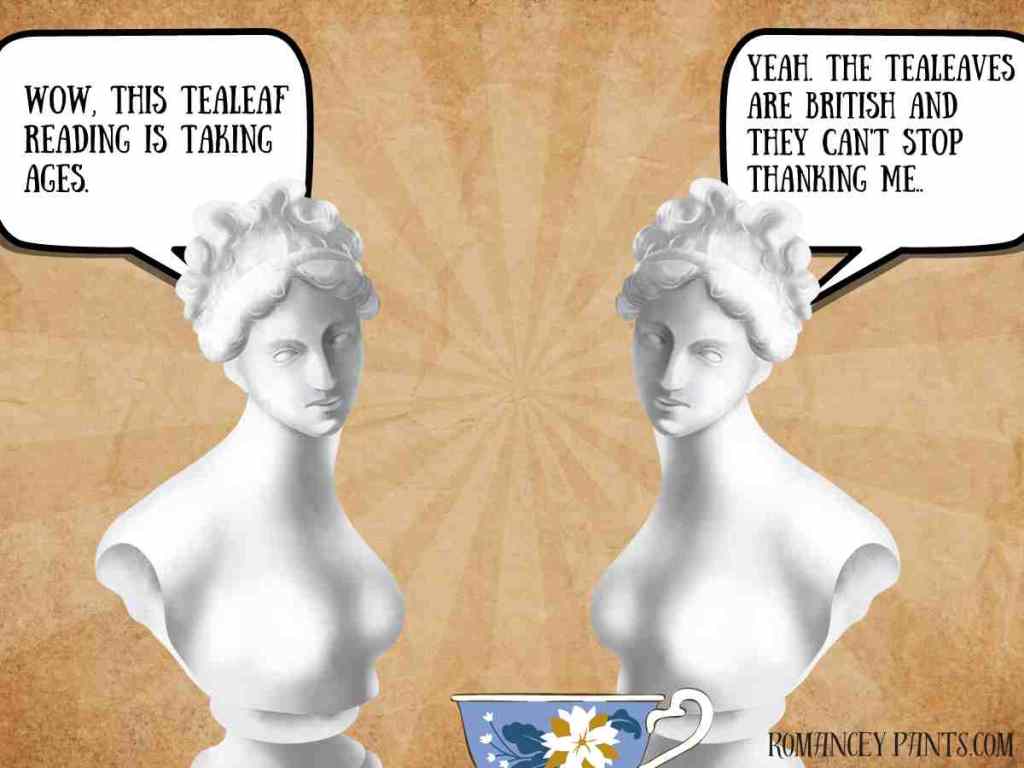
Friends, in the U.K—at least, while I lived there—the word “thank you” did not require a response. In fact, when shopping, the number of thank you’s that pass between the shop assistant and shopper are staggering. There are often several thank you’s on both sides during the payment process, the bagging process, and the leaving process. My theory? This happens because “thank you” in Britain is as easy as air, and it isn’t rude to not respond. In the U.K, thank you is given freely—it is the response. You can absolutely say, “You’re welcome” etc, and people often do, but it is never required. That’s my experience.
When I first arrived in the U.S, I learned that “you’re welcome” is the polite reaction. It wasn’t an easy lesson to learn.
Duck: I just write “You’re welcome” on the underside of my flipper and raise it whenever I’m unsure.
I’ve been thinking about this recently because I’m trying to shift how I feel when I read “thank you” in a romance dialogue. You see, in the U.S, I was taught to write differently to how I speak. When I was first taking literary writing classes, my writing instructors told me that the word “Thank you” should rarely be in direct speech. It’s TMI, they told me. It sounds extraneous, they said. Focus only on the scene’s most important words in order to sound naturalistic, they said. And once I was teaching literary writing classes myself, I continued this tradition.
Romance, I find, often has different rules. And generally speaking, it’s a different genre, so this makes sense. Some writers do include their “thank you’s” in the character’s dialogue, while others don’t. Sometimes it’s just reported, as in “She thanked him.” But many moons after my first writing classes and my move to the U.S, I still find reading “thank you” in direct speech jarring.
Which is sad, I think. And that’s why I’m trying to change.
How do you feel about “thank you” in direct speech? Does it jar you or is it part of a natural flow? Or do you feel differently about it? I’ve left the comments open so you can comment, if you’d like.
Duck: Also, how do you feel about bursts of grateful quacking?
Hope you’re having a great week, friends!

 Romancey Pants
Leave a comment