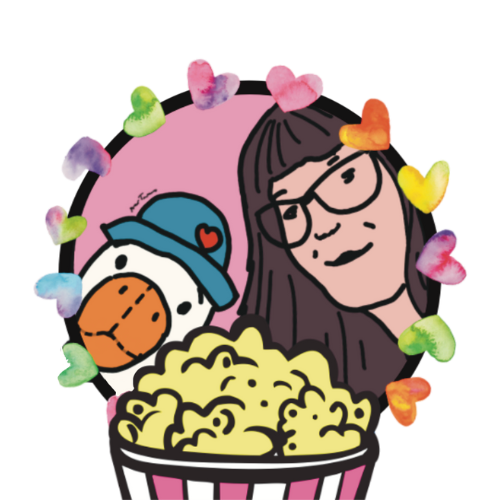

Duck: Waiting a ducking minute. You haven’t read ANY Emily Henry books?
Star: Not a one. And you know why? Because these days, I’m finding I really need diversity. Can’t seem to live without it.
Duck: I see. For you, diversity is like air in the beak-holes or water on the flippers. If you don’t have it, your bits dry out.
Star: Well, yes. Though I’d rather leave my bits out of it. Anyway, my hubby tells me Emily Henry writes a beak-to-flippers fabulous yarn. She is FUNNY, he says, and more page-turny than a mathematical goose who’s addicted to sudoku. Hubby says he’s captivated. He can see why Emily Henry’s a bestseller. But still, I’m sitting there, scratching my chin, saying, “But where’s the diversity? No, really!”
Duck: Star, does this longing for diversity have anything to do with your having come out recently in a bigger way?
Star: Interesting point, duck-friend. Since I came out more fully as intersex (I’ve been out as pansexual and nonbinary for many years) diversity has indeed felt even more important for me. But perhaps it’s also the political climate we find ourselves in. Marginalized communities are being treated very badly in the U.S. (and elsewhere too), so greater representation is powerful for me.
Duck: That makes a duck of a lot of sense. So what are you reading right now, Star?
Star: Well, I just finished Hairpin Curves by Elia Winters, which was for the most part a delight. And now I’ve moved onto Never Date A Roommate by Paula Ottoni. Adore the voice! Adore the protagonist! Adore the scenarios! And I love it that Never Date A Roommate is set in Copenhagen and has a Brazilian female protagonist. There’s some nice diversity, right? Doesn’t that just sound great, Duck?
Duck: How rich and exciting! Like a goldfish sundae with extra pondweed!
Star: Exactly! Now, outside of my experience as an immigrant, these characters may not reflect me much, but they do reflect life’s diversity, and that’s what I’m looking for. I want to see a richness of identities, including white cis/het characters perhaps, but definitely not including only white cis/het characters.
You know, in some ways it reminds me of when I was a classroom teacher in the UK. At our school, a large comprehensive, we had many ability levels, including in terms of literacy. As an English teacher, I saw two types of class—mixed ability groups and fast track groups. For me, the mixed ability groups were always especially delightful. Because there was more diversity in terms of abilities, we learned to work together for the good of all. In the mixed ability groups, I’d say things like this more often:
“Just because you find that easy, Student A, doesn’t mean others find that easy. It’s better if you say, ‘I’m good at this,’ and own it, because then you are able to offer help to others rather than shaming them by simply stating ‘it’s easy.’”
“That’s a great question, Student B! Let’s ask Student C, because I know they have a particular strength when it comes to word grammar.”
“Anyone who finds reading difficult can use a finger or a ruler to support themselves. Remember, it’s smart to do that. As a class, we praise that behavior.”
Star: This created a sense of diversity in terms of abilities and talents. And if also made for a classroom where students supported each other, owning their strengths and using them to help those around them. Isn’t that what we’d like our world to look like? A diverse place where we use our privileges to add richness and heart to this world?
Duck: I ducking agree, Star. I mean, when was the last time you saw a main character in a romance who had feathers and a beak? I’m searching for THAT romance all over the ducking place. Being reflected is important. And no, I’m not talking about the surface of my duck pond (which, granted, does need a bit of de-fugging).
Star: I hear you, Duck. And I wonder too if I feel surer of authors who write diverse characters. Perhaps I’m less likely to be offended by, say, language, including binaries—or perhaps, if I am offended, I’m far more patient, knowing the author’s intent wasn’t to push me out. This author means to be diverse. They mean to be inclusive. That’s a nice feeling. It gives the beak-holes a pleasant glow.
Duck: So, no Emily Henry ever?
Star: I wouldn’t say that! Right now, I am driven by diverse casts of characters. But I’ve loved many less-diverse books, and someday, I’m sure I’ll be in an Emily Henry mood. Jake speaks very highly of this gifted author and I’m so very glad her books are out there.
Duck: Different times call for different reads?
Star: Well, I think I’ll always crave diverse characters and authors. But yes, you’re right, Duck. Let’s see what the next era brings!
Featured image by Star Tavares using Canva.

 Romancey Pants